On May 26, 2026, the Regional Council of Lombardy approved the “Provisions regarding the establishment of data centers“ (Regional Law 11/2026), the first comprehensive regional regulation in Italy dedicated to data centers.
The law introduces clear authorization procedures, prioritizes the recovery of disused industrial areas, and sets specific power thresholds (5, 10, and 50 MW) that define urban planning regimes. For the construction sector, this opens a new pipeline of high-tech jobsites. To seize these opportunities, holding the correct Data Center SOA Certification (such as OS30, OS28, and OG12) becomes a strategic and essential requirement for both public tenders and structured private contracts.
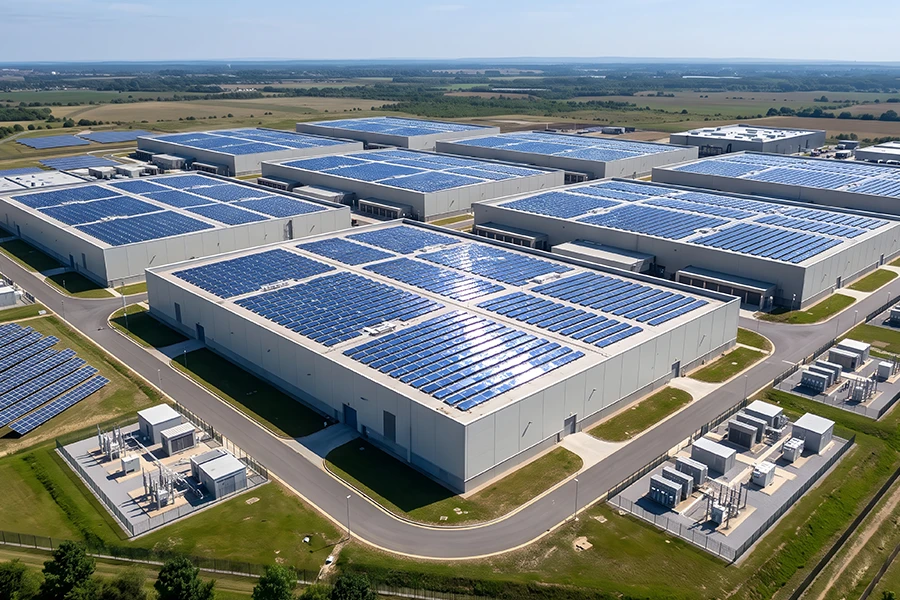
Objectives of Lombardy’s Regional Law on Data Centers
The growth of artificial intelligence and cloud computing requires increasingly complex infrastructure. Regional Law 11/2026 intervenes to standardize procedures across Lombardy, aiming to achieve four main goals:
- Support investments in the sector;
- Promote the redevelopment of brownfield/disused sites;
- Reduce land consumption and water impact;
- Coordinate data center facilities with electrical grids.
This new regional law fits into the national framework outlined by Decree-Law 21/2026, converted by Law No. 49 of April 10, 2026, which introduced a single unified authorization process for specific data center projects.
Priority for Brownfields and Urban Regeneration
The legislation grants strong priority to developments located in:
- Areas designated by municipalities for urban and territorial regeneration;
- Disused industrial sites;
- Contaminated or potentially contaminated areas;
- Degraded, unused, or underutilized sites;
- Disused or inactive quarries and mines.
Site selection must strictly account for proximity to electrical infrastructure to minimize the local impact of new grid connection works. Consequently, site location becomes a crucial design and economic variable capable of influencing building contributions, compensation measures, bureaucratic timelines, and preparatory site works prior to major construction.

Energy and Environmental Design Criteria
When designing data centers, the law imposes stringent environmental and energy standards. Priorities include:
- Utilization of carbon-neutral energy sources;
- Maximum exploitation of available surfaces for on-site renewable energy generation;
- Heat recovery from cooling systems;
- Integration with energy communities, public utilities, or district heating networks;
- Adoption of high-efficiency water-cooling systems;
- Prohibition of water extraction from public aqueducts and resources designated for agricultural or drinking use in cases specified by law;
- Use of non-potable water resources and graywater recycling.
Subsequent resolutions by the Regional Executive will define application thresholds, specific parameters, and technical criteria in detail.
Authorization Procedures: The Regional Desk
Article 4 of the law streamlines administrative competence to accelerate processing times: if the construction of a data center requires an Integrated Environmental Authorization (AIA), authority for issuing the single permit within the national procedure (Art. 8, D.L. 21/2026) shifts to the Region via the new Regional Data Center Desk (Sportello regionale per i centri dati).
For projects falling below the AIA threshold, standard municipal and provincial procedures remain in effect (including the AUA single environmental authorization), supported by uniform guidelines established by a regional task force to standardize evaluations.
Furthermore, applications must include a detailed energy report demonstrating the technical solutions implemented to maximize local renewable energy production.

Urban Planning and Power Thresholds
Article 5 addresses the complex issue of urban planning qualification based on the required grid connection power:
| Required Power | Regime |
|---|---|
| Up to 5 MW | Compatible with commercial and office (terziario e direzionale) zone designations. |
| Over 5 MW | Industrial/manufacturing (produttiva) zone designation (for contributions and territorial amenities). |
| Over 10 MW | Supramunicipal relevance: conference convened by the Province or Metropolitan City to negotiate a territorial agreement with equalization and compensatory measures. |
| Over 50 MW | Concertation conference convened directly by the Regional Authority. |
If the data center is integrated with heating plants or district heating networks for heat recovery, the facility is also permitted in technological service zones as a complementary or accessory structure.

Impact on Construction Sites and the Role of SOA Certification
For the construction supply chain, the new legislation accelerates the deployment of high-tech worksites. Economic incentives will direct investments toward brownfield redevelopment, boosting demand for preliminary remediation and demolition work. Meanwhile, streamlined bureaucracy ensures clearer and faster timelines for tender releases.
Because a data center is a complex infrastructure requiring operational continuity and strict security standards, timely qualification is essential: SOA certification is mandatory for public works contracts exceeding €150,000. However, obtaining the correct SOA categories is equally critical for major private projects today. The certification serves as standardized proof that a company:
- Possesses specific financial and organizational capabilities;
- Has proven experience in specific types of specialized work;
- Disposes of an adequate technical structure;
- Is qualified up to specific contract value tiers;
- Has successfully undergone official SOA verification systems.
Key categories include OG12 (environmental remediation, crucial for brownfield sites), alongside specialized installation categories OS28 (advanced cooling systems) and OS30/OG10 (high-voltage electrical power systems).
What this means for international companies
Lombardy’s new regulatory framework sends a clear signal to international investors: Italy is moving toward a more structured and predictable environment for data center development. By introducing dedicated authorization procedures and clear planning rules, the region aims to reduce regulatory uncertainty while encouraging investment in strategic digital infrastructure.
In the Italian market, SOA Certification is the recognized standard for demonstrating a contractor’s technical, organizational, and financial qualifications. For foreign companies seeking to establish a presence in Italy, obtaining the appropriate SOA categories can significantly strengthen market credibility, facilitate participation, and improve competitiveness in a rapidly expanding sector.

Sources and Regulatory References
- Lombardy Regional Law No. 11/2026, “Provisions regarding the establishment of data centers”, approved by the Regional Council on May 26, 2026.
- Decree-Law No. 21 of February 20, 2026, Art. 8 — Single procedure for data centers, converted with amendments by Law No. 49 of April 10, 2026.
- Bill (DDL) No. 1821 — “Government delegation for the organization, implementation, development, and enhancement of data processing centers”.